
About me
Ryan Tansom
I spent most of my life trying to understand how the world works and what it means to live a meaningful life.
My noble aim
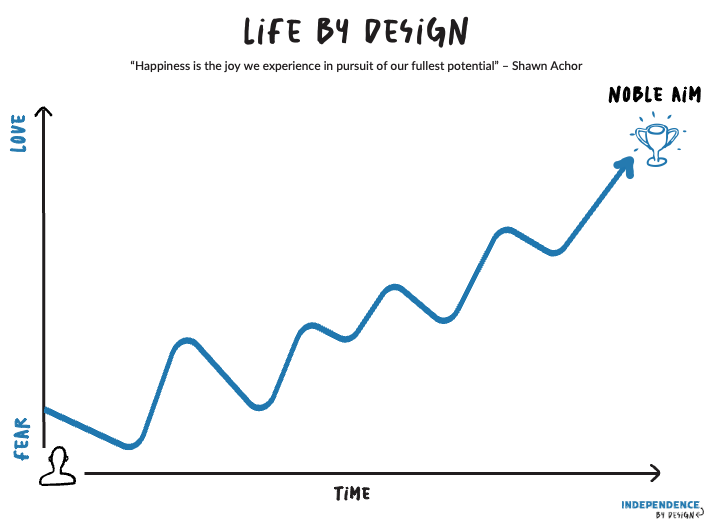
I believe the point of life is the experience of being here: learning who we are, choosing who we want to become and moving toward love. We have a finite amount of time, and I want to feel that the way I spend mine matters. I want to be present with the people I love, enjoy what I am doing and know why it is worth doing.
Read my full noble aimShow less
The way I understand God is that we are each part of something larger, and our lives are a way for God to experience itself. Our relationships and the contrast between love and fear give us the opportunity to discover ourselves. I know what it feels like to be consumed by resentment, envy and anger. I want to understand those parts of myself and take responsibility for how I respond, with more empathy for other people and more grace for myself. Moving toward love is something I want to practice in how I actually live.
That is why I spend so much time trying to understand how the world works, how people work and how I work. I want to see reality clearly enough to understand my choices and what I am trading when I make them. I feel aligned when what I believe, what I am working toward and what I am doing in this moment fit together. Understanding helps me put my energy into a life I have deliberately chosen.
I find meaning in pursuing something worthy of the effort it takes. I want to use what I am good at to help people I care about, with an impact that reaches beyond me and lasts over time. When I believe in what I am doing, the hard work and sacrifice have a purpose I can feel today. Learning, building, laughing and working through hard things with people I love are experiences I want my life to be full of.
Independence gives me room to live that way. I want to care for my health, use money to protect my time and make choices that let me stay true to my values. I want my family and the people around me to experience that freedom too. One of the things I love most is helping someone understand their own goals and choices well enough to feel confident in the life they are choosing. That is a meaningful way for me to spend the time I have.
What I want my freedom for
The morning I recorded a podcast about the meaning of life, my girls were waiting to go skiing. I want time to think through those questions. I also want to be able to close my journal, pull on my boots and go with them.
I’ve always wanted to know why.
The question I keep coming back to is what makes a life meaningful. I want to understand how the world works so I can choose what to do with the time I have.
What makes today worth living?
I keep coming back to that question in subjects that can seem far apart. I care about money because it affects who gets to decide how I spend a Tuesday. I care about God because I believe our lives are a way for God to experience itself. I care about how my mind works because I can be with people I love and still lose the afternoon to resentment or worry.
For me, meaning is something I want to experience along the way. I feel it when I know who my effort is for, why it matters and why I’d choose to be here doing it.
The recording behind this idea ↓I need a noble aim to know what’s worth the effort.
I know I can work hard toward a goal. The harder question for me is who will be better off if I give ten years of my life to it.
What makes a hard day worth it?
I know how to throw myself into a goal. I did it playing soccer, making sales calls and helping rebuild our family business. What I have to pay more attention to is the goal I’ve chosen. If I spend the next ten years getting good at this, whose life gets better? Will I have spent those years with people I want to know?
My dad and I could look at the same dollar and see two futures. I saw money to reinvest. He saw income he could count on after years of putting our family’s house on the line. I can still want a different outcome and understand why his mattered. That’s what moving toward love asks of me in a real disagreement.
Explore the noble aim exercise →I want my calendar to reflect what I say matters.
I marked the weeks I met Megan, married her and became a dad on a calendar of my life. Then I put it beside my work calendar.
Where the people I love show up in my week
I marked the week I met Megan, the week we got married and the weeks our girls were born on a calendar of my life. Then I put it next to my work calendar. One showed the events I’d remember forever. The other showed who was getting my attention that week.
I want afternoons skiing with our girls and time with Megan when I’m actually listening. I also love getting absorbed in a problem with an owner. I have to make room for both while these years are here. That’s part of why I care so much about the way I design my working life.
Which relationships can I keep showing up for?
Dunbar’s relationship circles give me another way to look at the calendar. Some people know what’s happening in my life this week. Others need an hour just to catch up. I want enough time with the people I care about to remember what they were facing last time and ask what happened.
Read the research on relationship circles ↗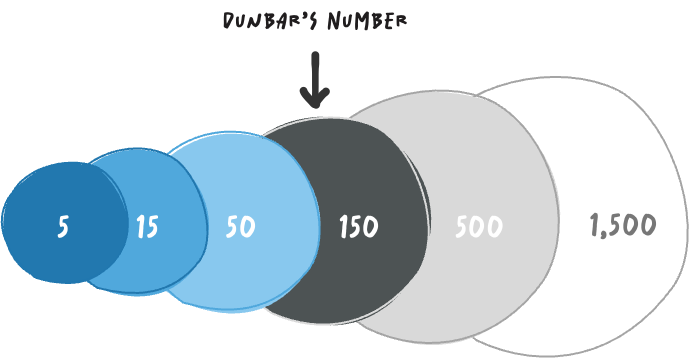
More about life with Megan and our girls
I want to be present for my life with Megan and our girls
Megan and our daughters are central to how I think about my time. I want to ski with the girls, stay active, have good conversations, and spend time with the people I love. I want to build a life Megan and I both want to be part of, with room for what matters to each of us.
In my conversation with Kim for episode 500, I talked about a calendar of my life with each square representing a week. I'd marked moments that mattered, including meeting Megan, getting married and having our kids. Comparing that with my annual calendar made the question of how I was spending my time pretty concrete.
I can get absorbed in an idea or a problem. I enjoy the thinking and the work, and I want to pay attention to what that asks of the people around me. Being present, taking care of my health and making time for relationships are things I want my actual choices to reflect.
Independence gives me room to live by my values.
I want enough say over my time and money to keep the commitments I make. That includes the work I take on, the people I work with and when I go home.
What a choice costs in real life
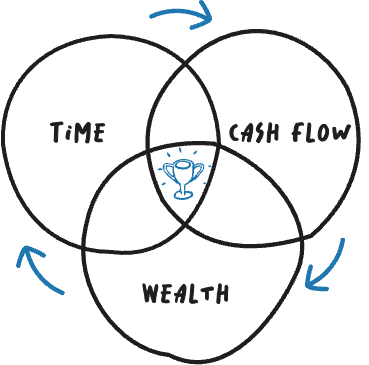
After we sold Imaging Path, I lasted about sixty days working for the buyer. We’d completed a successful sale, and I was still trying to work out how I wanted to spend an ordinary workday. That experience is one reason I pay attention to time, cash flow and wealth together.
Take hiring a general manager. The salary comes out of cash a business could distribute today. A capable leader might give an owner Fridays back and help build a company that can run without them. I want to see all three effects before making the trade. What I’d do with those Fridays is part of the decision.
Having that choice gives my values somewhere to go. I can protect time for my family, take care of my health and commit to work I believe is worth doing.
I want my work to give other people more freedom.
I built Independence by Design around the part of coaching I love. I help owners see their options clearly enough to make a decision they can stand behind.
Why I built the iBD Ownership OS™
I was telling my dad how much fun I’d been having in board meetings and one-on-one conversations. He helped me put a finger on what I loved. It’s the moment someone can finally say what they want, what they’re willing to trade for it and why the decision feels right to them.
My dad and I had needed that conversation ourselves. The Ownership OS starts with what the owner wants from life. Then we put the company’s cash flow, value and leadership alongside those goals so the owner can decide whether to keep building, change their role or sell.
That’s how I bring my own work into alignment. Owners pay us for coaching, community and the framework. They keep the equity and make the call. I get to spend my time helping people I care about choose the lives they want, and stay around to see what comes of it.
Explore the Ownership OS →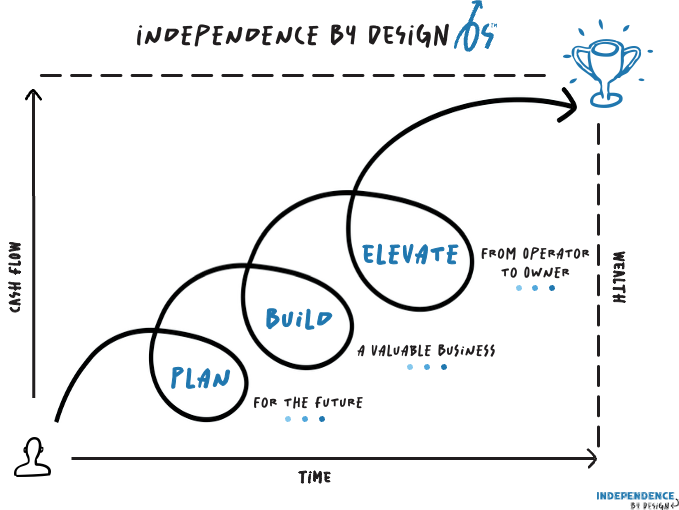
More about helping an owner make a decision
Helping people think is work I love
That experience led me to create Independence by Design. I help business owners connect their time, cash flow and wealth goals to the decisions they make about their companies. Keeping a company, growing it, selling it or changing their role can each make sense. Understanding what they want from ownership gives us a way to evaluate the choices.
Recently, I was telling my dad how much fun I'd been having in one-on-one client conversations and board meetings. He helped me put words to what I love about the work: helping people think through their decisions so they can be happy, whatever that means to them.
I love watching someone make a connection. We can take a situation that feels tangled, get clear on what matters, put numbers around the choices, and see the trade-offs. That can change how someone thinks about hiring a leader, taking money out of a company, selling it or spending another year doing what they're doing.
The person still owns the decision. I want them to understand their options well enough to choose with confidence and take responsibility for the choice. We can't know every outcome in advance. We can do the work to make a thoughtful decision, then learn from what happens.
I also enjoy the people I get to do this with. There can be serious work, difficult conversations and a lot of laughter in the same room. Helping an owner think more clearly can affect their family, their employees and the people their business serves. That gives the effort meaning for me.
My story
How I got here
I wanted to know what my dad and I could have done differently. In wealth management I learned to look at a business as an asset. On the podcast I could ask owners what a sale had meant to them after the money arrived. Each venture gave me another part of the answer.
The family business
2009I joined my dad at Imaging Path.
I joined our family business full time. We’d lost $940,000 on $21 million in revenue. My dad and I went to work rebuilding it with our team.
2013I wrote about the life I wanted with Megan.
I was already writing about who I was outside work and what kind of life I wanted with Megan.
2014We sold Imaging Path to Loffler. I was 27.
We had rebuilt the business with our team. The sale left me wondering what other choices my dad and I might have seen if we had understood each other’s goals earlier.
What I tried after the sale
2014 to late 2016 or early 2017I worked in wealth management.
After selling Imaging Path, I began to look at a company as an asset a family owns. I worked in wealth management through roughly December 2016 or January 2017.
2016I started the podcast.
I wanted to hear how other owners had handled decisions like the ones my dad and I had faced. The conversations continued as my work changed.
Around the podcast launchI started GEXP, my consulting firm.
As the podcast got going, I started the Growth and Exit Planning Collaborative. We helped owners understand what their businesses were worth and plan for growth or a sale.
The work I chose
2019Pat Hobby and I co-founded Arkona.
At Arkona we taught the Intentional Growth™ framework and built out fractional CFO services. The financial work made the trade-offs between income today and equity value over time concrete.
2024I left Arkona to start Independence by Design.
I wanted to focus on coaching, community and the Ownership OS so I could work directly with the owner making the decisions.
2026Kim interviewed me for episode 500.
Kim turned the microphone around. Ten years into the podcast, we talked about what I wanted to do with the time ahead of me.
My story on video · 28 minutes
Why I built iBD
This is the story of the turnaround, the sale and the ownership questions I carried into each venture.
Open the original video ↗The longer story of Imaging Path and the sale
I grew up around a family business
I grew up in Minnesota watching my dad build Imaging Path, a copier and IT company. He mortgaged our house to buy copiers because he wanted to build something of his own. I heard the stories when he came home from work, helped move offices as the company grew, and got to know the people who worked there. Employees became family friends. The business was part of our lives long before it became my job.
I also grew up wanting to know why I was doing something. School was a struggle when I couldn't see the point. Give me a goal I understood, whether it was soccer or a sales target, and I could put a lot of energy into it. I wanted to understand the game and have some say in how I played it.
I'd sworn I wouldn't work for my dad. Then I graduated from Saint John's University in 2009, in the middle of the financial crisis, and joined the company full time.
Later that year, I sat in a bank meeting with him and learned we'd lost $940,000 on $21 million in revenue. I was beginning to understand how much could be happening underneath a number that sounded impressive.
Over the next several years, I worked with our team to rebuild the business. We changed our accounting and operating systems, developed the managed IT services business, rebuilt the team, and won work I was proud of. I could listen to a book on the way to the office, try an idea, and see what happened. The learning had immediate consequences. Payroll still had to clear.
There was a lot I loved about it. We were building something together, and I could see the effect of our work on the company and the people around us. We got the business back to healthy profitability.
My dad and I also wanted different things. I wanted to reinvest and keep building. He wanted more income from the company and a path toward retirement. We were trying to make decisions about the same business while wanting different things from our lives. Our roles, money and identities were tangled together, and I didn't have a clear way to separate them.
Selling at 27 changed more than my work
We sold Imaging Path to Loffler in 2014. I was 27. We'd rebuilt the company and completed a successful transaction. I went home, sat on my bed and cried.
The sale changed the community we'd built. People I cared about lost their jobs. Friends and colleagues who'd been part of my everyday life were suddenly going in different directions. The company that had occupied so much of my time and attention belonged to someone else.
I lasted about 60 days working for the buyer. I struggled with the loss of autonomy and with who I was once I wasn't running the business.
Those questions had started before the sale. In a journal entry from October 2013, I was already trying to work out who I was apart from my job and what kind of life I wanted to build with Megan and our future family. The business had become a large part of how I understood myself.
I wanted to understand what we could have done differently. How could my dad and I have made room for both of our goals? What did the business need to earn? What was it worth? What other choices did we have, and what would each one have meant for our time, our money and the people around us?
More about the work I tried after the sale
I kept learning and trying things
After the sale, I spent time in financial services, built businesses that helped owners understand their finances and prepare for growth or a sale, and started a podcast. I wanted to understand both the mechanics of ownership and the experience of the person making the decisions.
Talking with other owners gave me a way to compare what we'd lived through with what they'd done. Learning about cash flow, valuation and investing helped me understand choices I hadn't known how to evaluate. I could see more clearly how a company could be valuable and still demand a life its owner didn't want to keep living.
I was also learning through my own businesses. I could build something that worked for a customer and still create a job that didn't fit the life I wanted. I had to apply the questions to myself, including when the answers meant changing what I was doing.
The podcast became a way to spend time with people I was curious about and learn things I could use. Books, conversations, workshops and coaching kept giving me ideas to test. I enjoyed making connections between them, trying something in practice, and coming back with a better question.
What I’m building now
Why I’m building a community of 150 owner-operators
I built Independence by Design so I could play the game of business and life with people I love and respect. To me, the business we own is a vehicle for designing our freedom. When it can run without us day to day, we have more say over how we spend our time, the cash flow we take home, the wealth we build and the impact we have on other people’s lives. That’s the idea behind the Ownership Operating System.
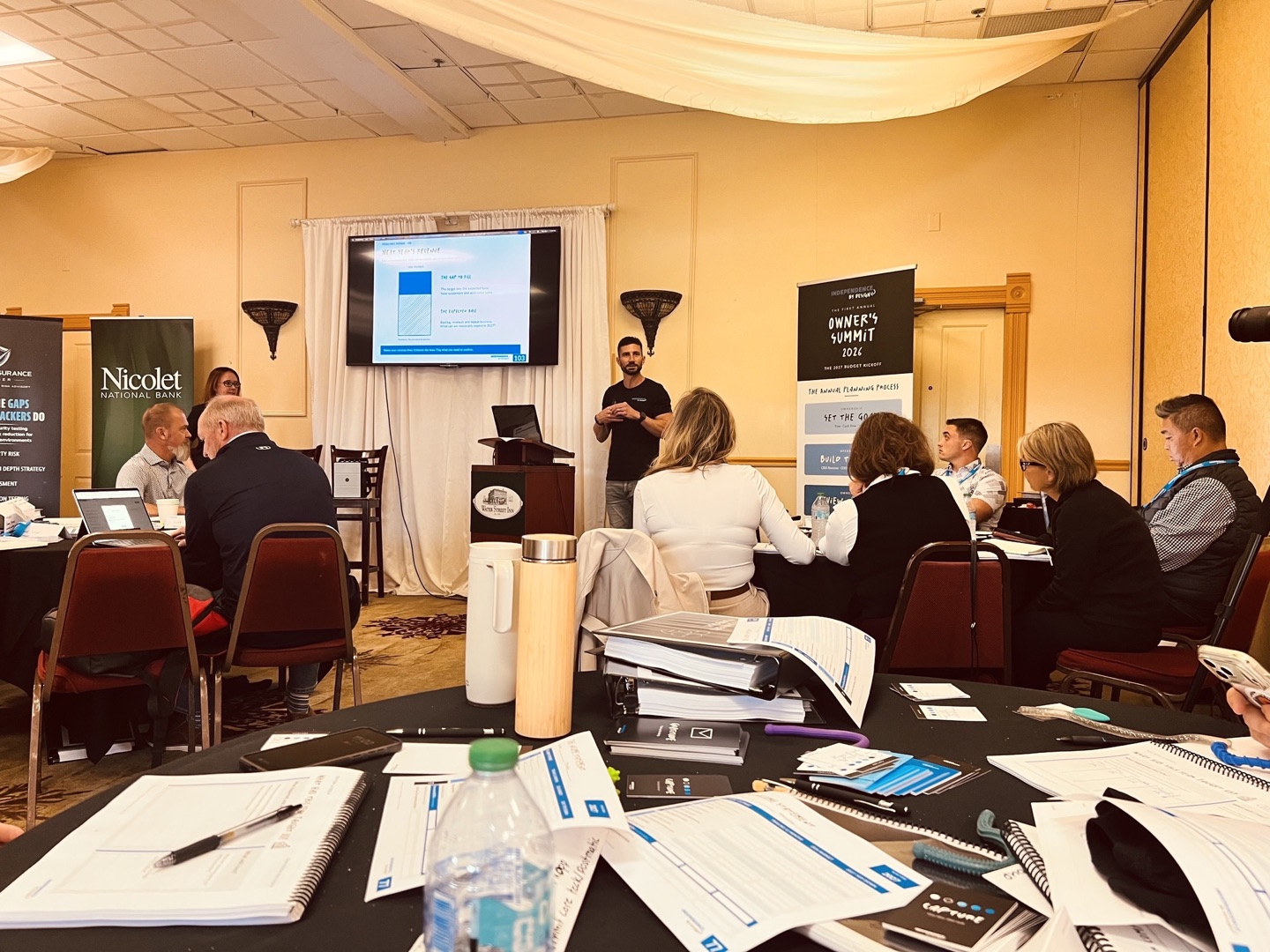
I chose 150 because I want to know these owners for years. One conversation can help an owner hand more responsibility to someone they trust. That person gets a chance to lead, and the owner gets more time with their family. That’s my noble aim in practice.
What the Playbook and the community make possible
An owner might bring a question to the group about whether they can afford to hire someone. We can open their Playbook, look at the numbers and talk about what they’d do with the time they’d get back. I want us to know each other well enough that when it’s my turn to make a hard call, I know who I can call, too.
Hear Kim and me talk about why we’re building this ↓On the podcast
Get to know me in three podcast episodes
I’m usually the one asking the questions. If this is your first time here, I’d start with episode 500. Kim turns the microphone around and asks me about my family, the sale and what I want to do with the time I have.
 Independence by DesignEpisode 500
My story, with Kim Clark
Kim and I get into what I carried with me after we sold the family business and why I wanted to build iBD.
Independence by DesignEpisode 449Understanding the Meaning of Life, God, and Money
I read from my journal about why we’re here, what makes our time meaningful and how my thinking about God and money fits into those questions.
Independence by DesignEpisode 517Self-awareness and leadership
Rich Hoffmann and I talk about what happens when I’m still working out an idea and the person listening thinks I’ve already made up my mind.
Ryan’s library
More behind my thinking
Start here
How I See the World →
I keep coming back to two questions. What makes the way I spend my life worthwhile? What would give me the freedom to spend it that way? That’s where these five subjects meet for me.
Browse the full reading guide →
Why I collect these ideas and write about them
I want to understand how the pieces fit together
My curiosity reaches into money, economics, human behavior, philosophy, God and the systems we live in. These subjects connect to questions I care about: what we believe, how we treat each other, what choices are available to us, and what makes our effort worthwhile.
I think out loud. Sometimes I'm describing something I've spent years working through. Sometimes I'm testing an idea as I say it. A conversation with Rich Hoffmann helped me recognize how easily those can sound the same to someone listening. I'm learning to make that distinction clearer and give other people room to challenge what I'm saying.
Writing is another way for me to work through those connections. I want to explain what I currently think, what helped me get there, and what I'm still trying to understand. I want to connect those ideas with the books, people and conversations that shaped them, so you can explore the material yourself.
My hope is that knowing more about where I'm coming from gives us a better place to start a conversation. We can understand each other more clearly, examine where we disagree, and think together about the lives we're choosing.